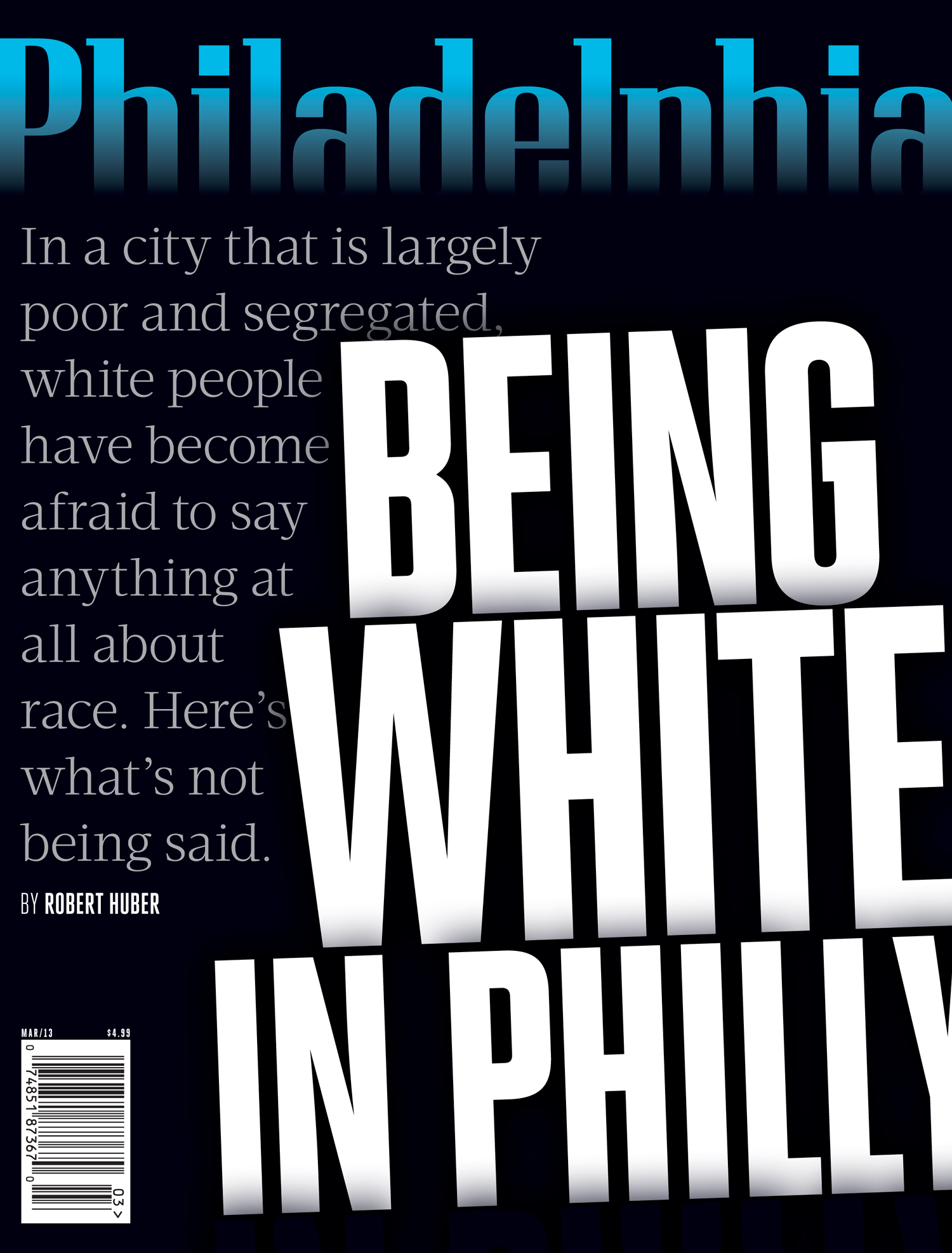
One person's close minded thinking shows how racism still exists
My younger son goes to Temple, where he’s a sophomore. This year he’s living in an apartment with two friends at 19th and Diamond, just a few blocks from campus. It’s a dangerous neighborhood. Whenever I go see Nick, I get antsy and wonder what I was thinking, allowing him to rent there.One day, before I pick him up for lunch, I stop to talk to a cop who’s parked a block away from Nick’s apartment.
“Is he already enrolled for classes?” the cop says when I point out where my son lives.
Well, given that it’s December, I think so. But his message is clear: Bad idea, this neighborhood. A lot of burglaries and robberies. Temple students are prime prey, the cop says.
Later, driving up Broad Street as I head home to Mount Airy, I stop at a light just north of Lycoming and look over at some rowhouses. One has a padlocked front door. A torn sheet covering the window in that door looks like it might be stained with sewage.
I imagine not a crackhouse, but a child, maybe several children, living on the other side of that stained sheet. Plenty of children in Philadelphia live in places like that. Plenty live on Diamond, where my son rents, where there always seem to be a lot of men milling around doing absolutely nothing, where it’s clearly not a safe place to be.
I’ve shared my view of North Broad Street with people—white friends and colleagues—who see something else there: New buildings. Progress. Gentrification. They’re sunny about the area around Temple. I think they’re blind, that they’ve stopped looking.
Indeed, I’ve begun to think that most white people stopped looking around at large segments of our city, at our poorest and most dangerous neighborhoods, a long time ago. One of the reasons, plainly put, is queasiness over race.
Many of those neighborhoods are predominantly African-American. And if you’re white, you don’t merely avoid them—you do your best to erase them from your thoughts.
At the same time, white Philadelphians think a great deal about race. Begin to talk to people, and it’s clear it’s a dominant motif in and around our city.
Everyone seems to have a story, often an uncomfortable story, about how white and black people relate.
Take a young woman I’ll call Susan, whom I met recently. She lost her BlackBerry in a biology lab at Villanova and Facebooked all the class members she could find, “wondering if you happened to pick it up or know who did.” No one had it.
There was one black student in the class, whom I’ll call Carol, who responded: “Why would I just happen to pick up a BlackBerry and if this is a personal message I’m offended!”
Susan assured her that she had Facebooked the whole class. Carol wrote: “Next time be careful what type of messages you send around and what you say in them.”
After that, when their paths crossed at school, Carol would avoid eye contact with Susan, wordless. What did I do? Susan wondered.
Wow.The only explanation she could think of was Vanilla-nova—the old joke about the school’s distinct lack of color, its perceived lack of welcome to African-Americans. Susan started making an effort to say hello when she saw Carol, and eventually they acted as if nothing had happened. The BlackBerry incident—it probably goes without saying—was never discussed.
source
the black urban times llc
#urbanforwardmovement


No comments:
Post a Comment
We appreciates all comments and fosters free speech, however, keep in mind that we have young readers who peruse our site. Having said that, please refrain from using profane language, and know that flaming will not be tolerated. Spam will not be tolerated.